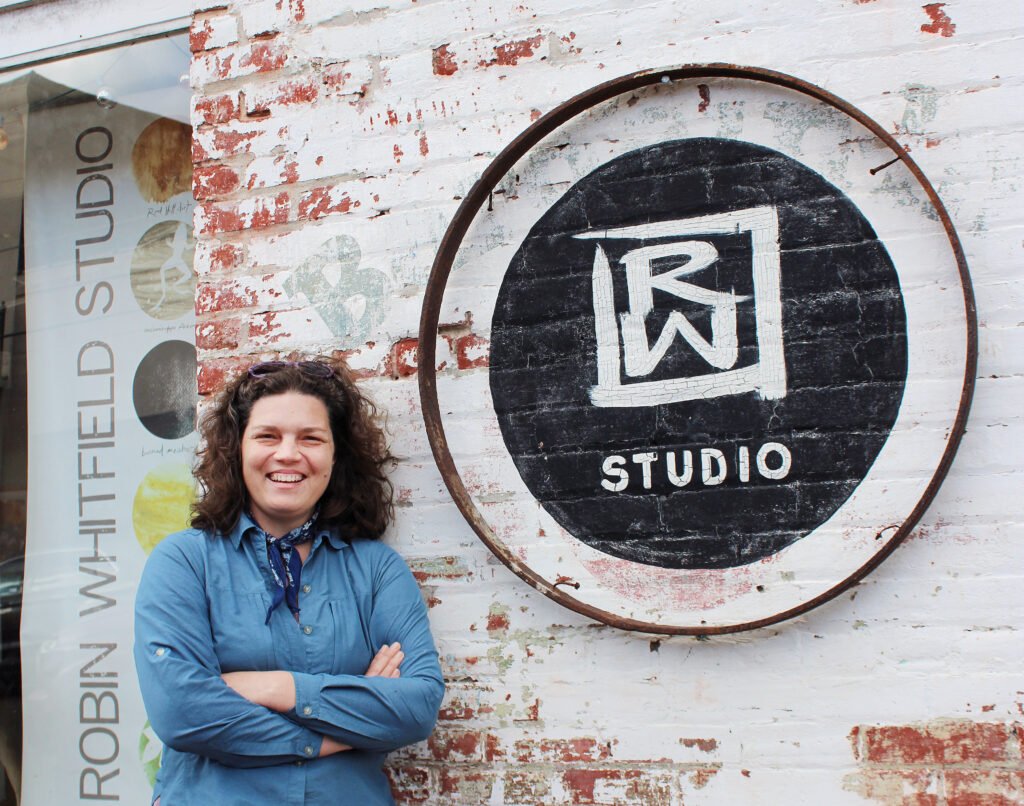
For artist and conservationist Robin Whitfield, saving a Mississippi wetland began with simply spending time in it.
Long before Robin Whitfield became a conservationist, she was an artist looking for a place to belong.
As a child, Whitfield followed her mother, an art teacher, on field trips along the Mississippi Gulf Coast. One of those trips took her to the small cottage of artist Walter Anderson. There, Whitfield encountered something that would stay with her for the rest of her life.
Anderson had devoted himself to observing and interpreting the natural world around him, particularly the Mississippi Gulf Coast and Horn Island. To Whitfield, his work demonstrated something powerful: One person who deeply loved a place could help other people see it, too.
“I quickly saw a kindred spirit,” Whitfield recalls. “I knew that I wanted to do what he was doing.”
Anderson became an early model for the kind of artist Whitfield hoped to become — someone who could disappear into a landscape, understand it intimately and then give others a glimpse of a world they might never otherwise experience.
Years later, that philosophy would lead Whitfield to a very different Mississippi landscape.
Fresh out of college, she moved to Grenada to paint murals. She knew few people and, by her own description, her naturally shy personality took over. So she did what came naturally: She looked for a quiet place to spend time.
Just across the bridge from downtown Grenada, she found one.
The beginnings of Chakchiuma Swamp
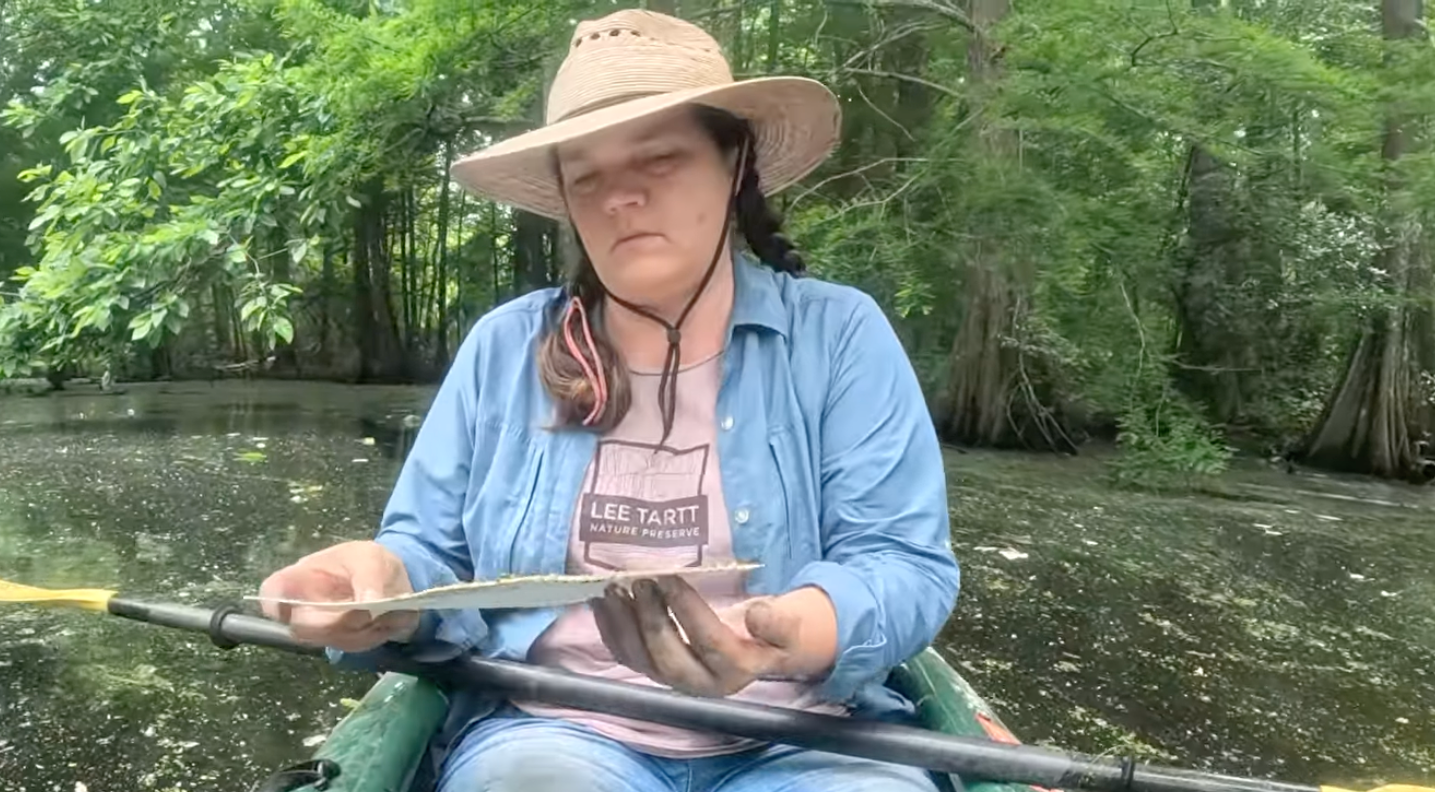
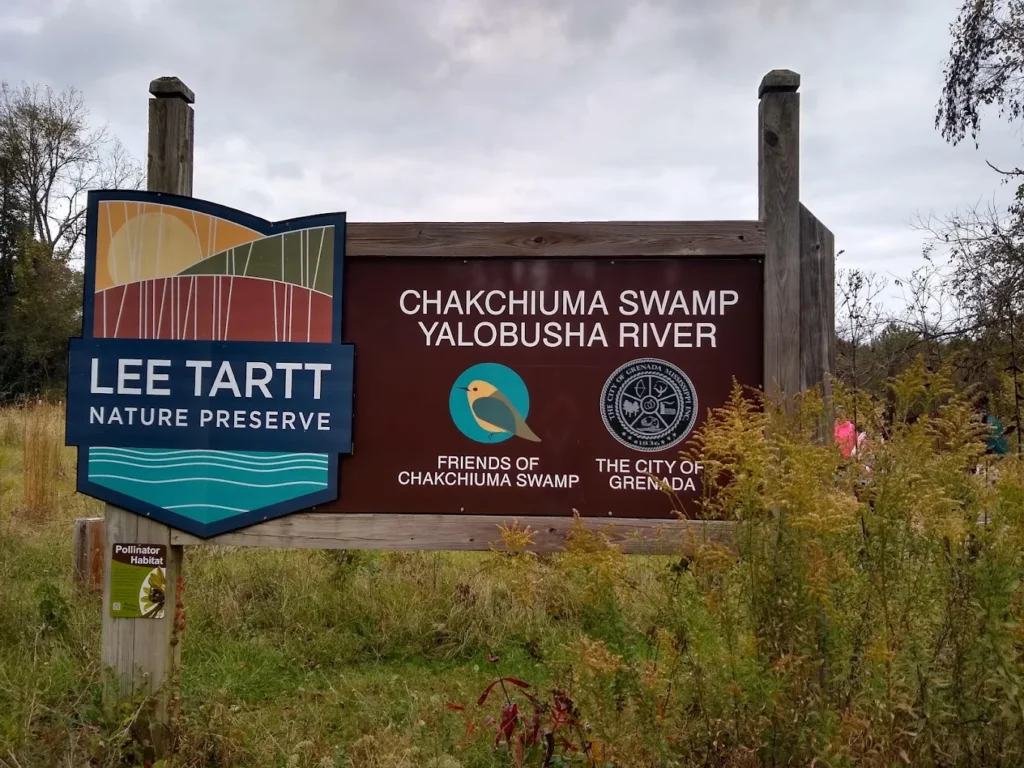
Lee Tartt Nature Preserve is a 300-acre bottomland forest shaped by the Yalobusha River. Within the forest are oxbow lakes that became known as Chakchiuma Swamp.
At first, Whitfield simply came to paint.
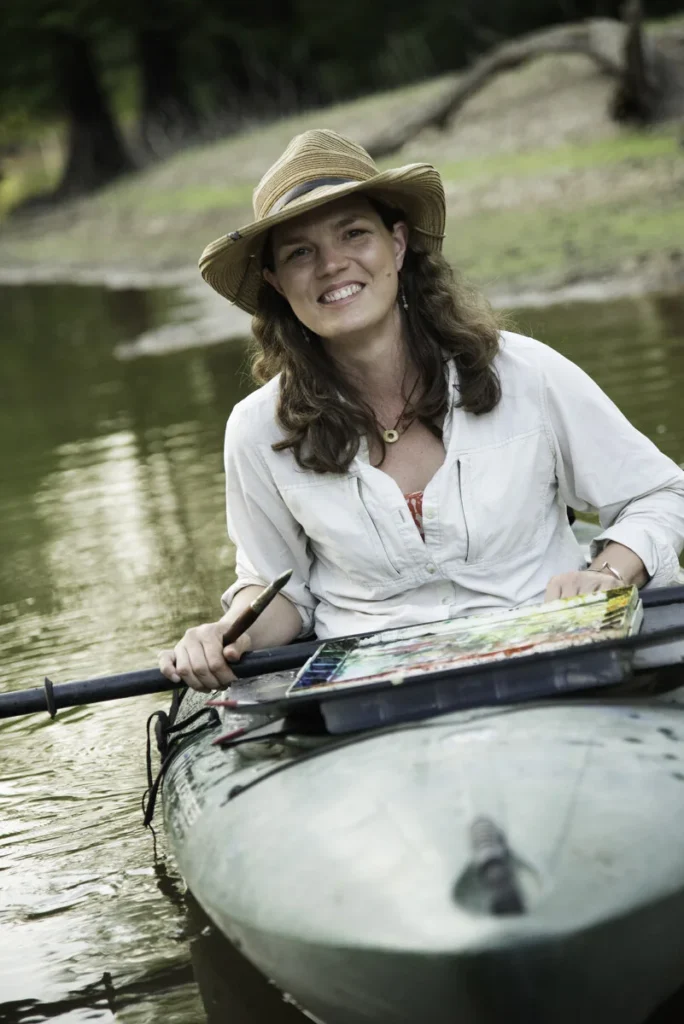
But the swamp quickly became something more.
“It really became my teacher,” she says. “Not just my art teacher, my life teacher, but also my naturalist teacher.”
The more time she spent there, the more she noticed.
When Whitfield first began visiting, there was no gate or formal protection. People dumped old furniture, abandoned dead animals, gathered for parties and fired guns. After rain, mud trucks tore through the landscape, leaving deep tracks behind.
The place had become, in Whitfield’s words, a “free-for-all.”
Eventually, the artist who preferred to remain on the sidelines decided she couldn’t simply watch anymore.
She approached the city manager and asked if she and a group of local residents could clean up the area and give it a name.
That grassroots effort became the beginning of a much larger mission.
“Dump Lake” was the name many people used for the place at the time — a name that reflected how it had been treated. Whitfield and others decided the community should have a voice in choosing something better.
School groups, civic clubs and individuals submitted suggestions.
One name kept appearing: Chakchiuma.
Whitfield had never heard the name before. She learned that it referred to Native people who had lived in the area along the Yalobusha River — the “Red Crawfish people.”
The effort eventually became Friends of Chakchiuma Swamp.
Beginning around 2009, the group operated informally. Volunteers put up a sign and returned each month to pick up trash. For several years, that was enough.
Then came 2016. Whitfield arrived at the swamp one day to paint and saw timber-harvest ribbons surrounding the entire 300 acres. The city planned to sell the timber.
“I didn’t know what to say,” Whitfield remembers.
Using Forestry to Save the Swamp
By then, Whitfield had begun studying forestry at a local community college. She understood that cutting trees could be an important part of forest management. But she also came to understand the distinction between conservation-minded forestry and harvesting trees simply for their financial value.
“Conservation cutting and cutting for money are two different kinds of cuts,” she says.
The threat forced Whitfield to reconsider her own role.
She had always thought of herself as an artist — someone who could observe nature, translate it onto canvas and share its beauty with others.
But perhaps there was something else inside her.
“I didn’t really realize is that I had a conservationist, a very strong conservationist deep inside me,” she says.
And then came the question that changed everything:
“If I couldn’t save this place right here in my backyard that I loved and went to every day, what could I save in life?”
Whitfield began bringing experts to the swamp, including representatives from the Mississippi Forestry Commission and The Nature Conservancy. She hoped someone would tell her exactly what to do.
No one did.
Instead, one forester helped her understand the economics of the forest by walking from tree to tree and explaining what individual trees were actually worth.
Whitfield had assumed the mature oaks and sweet gums were worth thousands of dollars apiece. The forester told her many were worth less than $100. Even some of the large bald cypress trees were valued at only a few hundred dollars.
That realization sparked an idea. What if people could adopt a tree?
Instead of simply asking people to donate money to save a forest, Whitfield envisioned allowing them to develop a personal relationship with an actual tree.
The program became Forest Friends.
Donors could help preserve a tree and learn where that particular tree was located so they could visit it themselves.
The idea was about more than fundraising. It was about connection.
“We wanted humans to realize that they are a part of a forest, too, if they choose to be,” Whitfield says. “Everything on this planet, we are all connected.”
The effort came at a critical moment. Whitfield discovered that some members of the city council had never even visited the swamp. Without a personal connection to the landscape, she believed, it was easy to see the forest simply as a financial asset on a piece of paper.
The Friends group attempted to purchase the timber rights, but its bid wasn’t enough.
Tartt Legacy
Then, unexpectedly, help arrived from another part of the community.
That same year, Grenada man Lee Tartt was killed while attempting to save a young girl during a hostage situation. A longtime family connection led to a $300,000 donation to the city in Tartt’s memory, with a request that the property be named in his honor.
Tartt had been a special agent with the Mississippi Bureau of Narcotics and was known for his work as a negotiator and de-escalator. He also loved the outdoors, fishing and spending time in nature.
For Whitfield, the connection was profound.
The qualities that made nature meaningful to her — a place for reflection, connection and renewal — had also been part of Tartt’s life. The swamp could become a memorial not simply to a person who died bravely, but to the restorative power of nature itself.
In 2018, the Friends group formalized as a nonprofit, Friends of Chakchiuma Swamp, with a mission centered on “connecting people to nature with curiosity, creativity, and conservation.”
Whitfield’s vision had expanded.
Saving the land was only part of the challenge.

She had begun to realize that simply protecting a natural place, building trails and inviting people to visit wasn’t necessarily enough. People needed reasons to connect with nature — and they needed experiences that could change the way they saw the natural world.
Whitfield had seen that happen at other nature events, including the Hummingbird Festival at Strawberry Plains. Talks, tours and art could alter people’s perceptions and make nature feel personal.
So she began looking for ways to bring those ingredients together at the swamp.
People loved paddling. They loved birds. They loved native plants. Why not combine them?
The result was Spring Wings, a spring migration event designed to bring people into the landscape and introduce them to its birds, waterways and native plants.
For Whitfield, the experience is about far more than an afternoon outdoors.
It’s about falling in love with a place.
She describes paddling through the swamp with the sun overhead, slipping through the Mississippi water — until the inevitable happens and she finds herself stuck in the mud.
The humor is part of the story. So is the inconvenience.
Because, Whitfield believes, people don’t protect what they don’t love.
And they can’t love something they never take the time to know.
“Until someone comes to love something, they’re not willing to go out of their way to be inconvenienced or even to invest in something that they do not love,” she says.
Love, in her view, requires repetition.
You return. You spend time. You notice things you didn’t notice before.
Eventually, a landscape that once seemed like simply a patch of woods or a swamp becomes part of your life.
Whitfield learned that lesson herself. It wasn’t until the swamp was threatened that she fully understood what it meant to love a place.
Today, she gives much of her time and energy to caring for Chakchiuma Swamp and helping others develop their own connection to it.
And she still believes art has a critical role to play.
As a young artist, she was inspired by Walter Anderson’s ability to translate his love for the Gulf Coast into paintings that allowed others to see the world through his eyes.
Now she hopes to do something similar.
“I think my loving of this place, like Walter Anderson’s loving of the coast and Horn Island, he passed his love to me,” Whitfield says. “And I think that’s where the arts come in.”
Her paintings show people what lived — and lives — in the swamp.
The paintings are more than representations of a landscape. They are invitations to look closer.
Whitfield has spent years learning that conservation doesn’t always begin with a grand plan. Sometimes it begins with one person showing up, again and again, simply because a place matters to them.
“I guess I’ve bet my life on it,” she says.
For Whitfield, the bet is that if people can experience the beauty of a place — through a painting, a paddle, a bird, a native plant or simply a muddy pair of boots — they might begin to love it.
And if they love it, perhaps they’ll help save it.