

Tres Dean
GQ
Tramell Tillman has been looking forward to this for a while. After appearing on Severance as the villainous floor manager Mr. Milchick—and becoming the first Black man to win an Emmy for Best Supporting Actor in a Drama Series—he found himself, at the turn of his 40s, in the sort of position most actors spend their entire careers working toward. The town was coming to him, eager to get him in the mix for projects both massive (Mission: Impossible–The Final Reckoning) and smaller (Lena Dunham’s upcoming Good Sex).
When an actor is in that unique place, they can afford to be so audacious as to seriously consider what’s on their career bucket list. For Tillman, the Marvel Cinematic Universe was one of those entries. So when director Destin Daniel Cretton reached out to him on Memorial Day weekend last year to see if he’d like to join the cast of Spider-Man: Brand New Day, it was an easy yes, even when Cretton added one caveat: he couldn’t say a word about the part to anybody.
Brand New Day’s biggest secret, of course, pertained to Sadie Sink. Her character’s identity remained a mystery until the film hit theaters and confirmed what many tea-leaf-readers had long speculated: the X-Men have arrived. Sink is playing Jean Grey, one of the most important and recognizable characters in the entirety of Marvel lore, and one whose debut signifies that the MCU’s mutant era has begun.
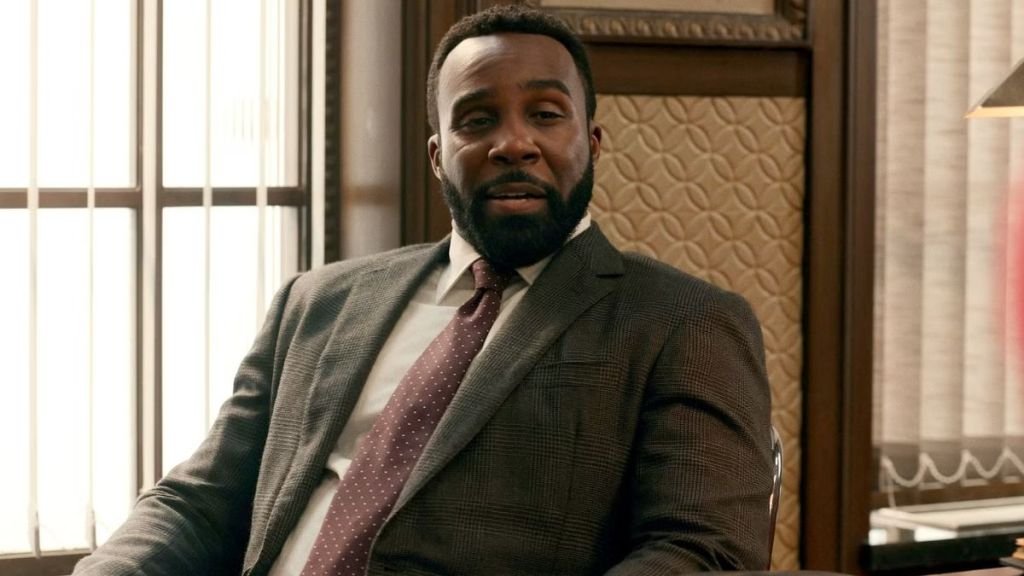
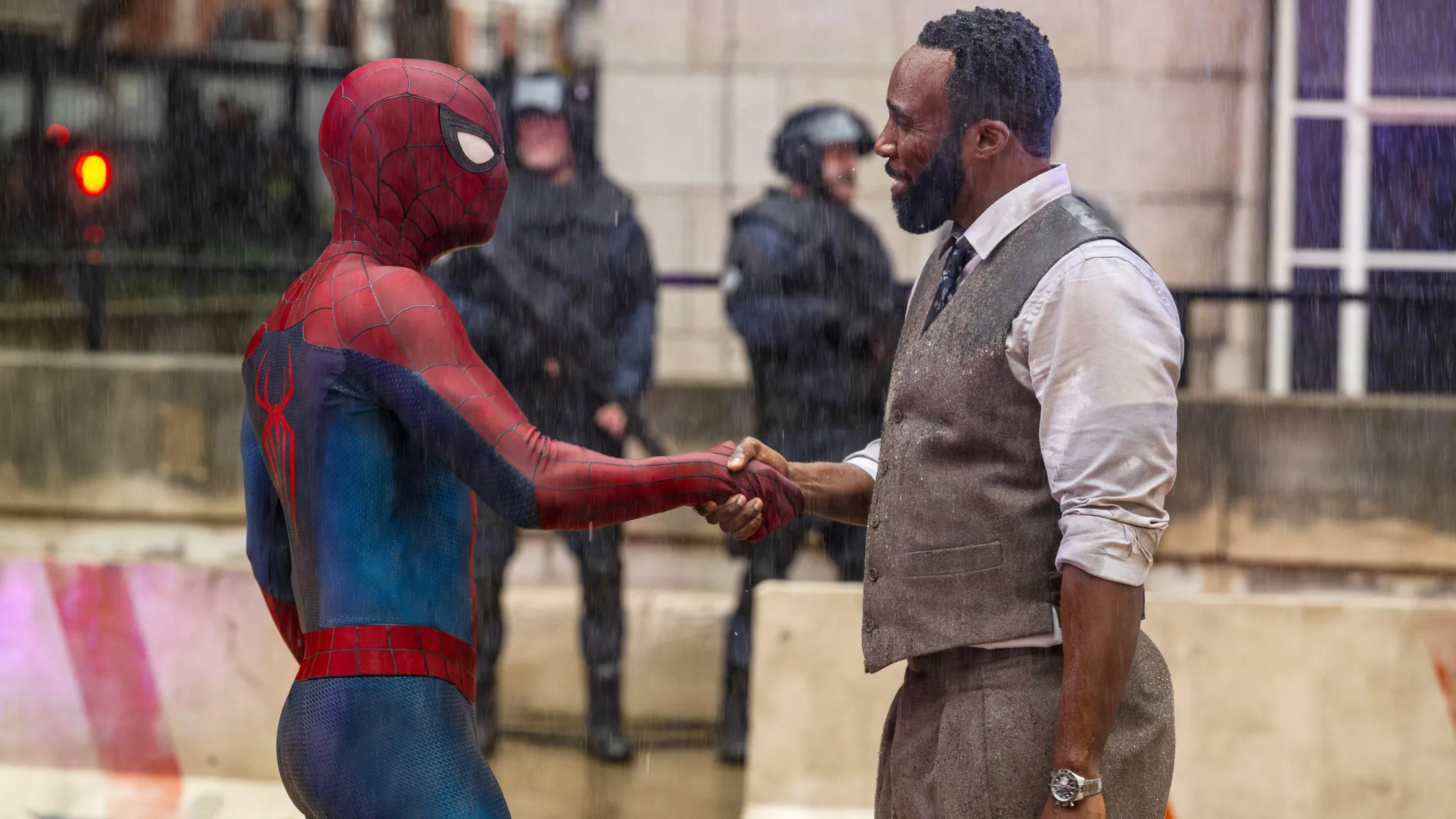
Tillman’s role was also kept under wraps, in part because it’s directly connected to Sink’s big reveal. He’s playing Bill Metzger, a character who first appeared in the 1999 miniseries X-Men: Children of the Atom by Joe Casey and Steve Rude. In the comics, Metzger is a prominent activist who runs the Anti-Mutant Militia. For the MCU, he’s been reworked as a higher-up at Damage Control, a government agency tasked with containing and cleaning up the destruction left from superhero brawls. But he couldn’t say a word about his role in the film to anyone–until now. A week after the film’s release, Tillman joined GQ via Zoom to finally tell all about joining the MCU, his approach to building the character, and whether or not he sees Metzger as a villain.
GQ: Brand New Day premiered last weekend, and you basically went straight from the red carpet to New York to begin filming Season 3 of Severance. Amidst that whirlwind, did you have the chance to stop and appreciate the moment?
Tramell Tillman: I did take a couple of breaths at the premiere. It’s quite remarkable. I was excited for my team specifically to see it. I’ve received so many questions about my involvement in the movie and I didn’t tell a soul. So I was seeing a plethora of theories online and imagery, and had people asking me if I was playing this guy or that guy, and it was just so tough to keep a secret. But once the secret was out and I was able to celebrate with Tom, Zendaya, Destin, Liza, Michael, Marvin, all the people I’ve had the pleasure of getting to know, it was such a delight.
Your character, Bill Metzger, is a tricky one to reveal, because he has major implications for the future of the MCU, but he’s also a guy whose name only real die-hard comic book readers are going to recognize. How was Metzger contextualized for you in early conversations about you taking on the role?
I was in LA and it was right around Memorial Day Weekend, and I got a call from my team asking if I wanted to do a Marvel movie. That was something that had been on my list for a while. So they set up a meeting with Destin, and I’m pretty sure I had to sign NDAs even before that conversation happened. It was a little frustrating, because everything was shrouded in secrecy. So I wasn’t even sure specifically how the character would fit into the world of the movie, and I’m pretty sure they had to play their cards very close to the chest because they weren’t sure if I was going to accept it. So we’re kind of playing this back-and-forth game where I’m asking Destin, “Well, what can you tell me?” And Destin would say, “It’s this and that, but I can’t say anything more than that.” But he told me it was a pivotal role, and that’s about it. So this was a leap of faith. Do I want to jump at this opportunity or do I want to hold off and wait for another potential opportunity from Marvel?
I’m glad that I said yes to him. We had a lot of conversations, me, him, and Justin [Kuritzkes], the writer I worked with primarily, about fleshing out this guy and understanding who he’d be in the movie. The description we landed on was that he’s a corporate guy but also a bit of a politician. And that gave me a lot to feed on and break ground on the role.
Destin and Justin are both guys who have made their names on really thoughtful, nuanced character work. What was that process of breaking ground like, and how did you go about translating what was on the page to the screen?
My question for Justin was how much of his identity or motives would be present in the film? And as the script came together I realized they’re all played very close to the chest. The audience doesn’t know what his personal motivations are, which is fun to play. But we know the facts. Damage Control has been struck multiple times. He’s the director and he’s in charge of keeping his employees safe, the city safe, and the world safe. So now there’s this threat [Jean] that’s out there, and from there I locked in on that intention, of keeping everyone safe.
A lot of blockbuster movies have done this sort of reveal–the corporate guy who turns out to be the villain–and often there’s some real mustache-twirling when that turn comes. Metzger doesn’t have that. He’s calculating and pragmatic. Do you think he sees himself as a villain?
I had to stay away from what this guy is and what he isn’t. For me what’s more important is what’s he after? I had this colorful conversation with Destin during some reshoots. He says, “Your character is hurting people.” And I said, “My character is stopping someone from hurting people.” Jean Grey and the powers she has, that’s not a small threat. The field of control she creates at the end of the movie, that’s terrifying.
Your approach to Metzger on-camera reminds me of your work as Captain Bledsoe in Mission: Impossible—you exhibit a real command of language, and you choose the right moments to put a little something extra on a line delivery. A line like “And you must be out of your mind” doesn’t read as a showstopper, but it plays that way because of what you do with it. Where does that come from and how do you go about picking your moments to lock in like that?
Language is everything. I learned that from a really young age. Syntax, sentence structure, everything has purpose. I’ve been very fortunate to work on text-heavy material like Shakespere, August Wilson, Lorraine Hansberry, and even Severance. And what I’ve learned from that is you always lean into the language. That has been a guiding light for me, in how to put a little something extra on it. It’s all about applying meaning to every word, and I love words, as I’m sure you can tell.

You’ve spoken at length before about how your experiences working in corporate America through your twenties heavily influenced your approach to playing Mr. Milchick on Severance. More specifically you’ve noted that he’s a bit of an amalgamation of a few people you met in offices during those days. Was there a similar real-life frame of reference for this corporate antagonist?
I lean more into the politician analogy for Metzger. I had this inkling that Metzger had just a little bit of swag, a little smoothness. So the politician who came to mind immediately was President Barack Obama. There’s a fullness, a calmness, a steadiness there. I borrowed a little bit of that and marinated it in my own flavor, because we have to believe Metzger. We have to trust him.
Destin mentioned in a recent Interview story that you had an R&B playlist for Metzger that you listened to on set. What was on that?
I won’t say what’s on it because my process, that journey, it’s very personal to me. But I will give you a little something and say that the decade was the ‘90s.
What is it about guys like Milchick or Metzger that makes them such compelling villains? Is it how true to life their strain of antagonism is? Is it a ‘banality of evil’ kind of deal? Do you see Metzger as a villain?
I like the X-Men, so, yeah, I do. But I guess when you zoom out, Jean Grey definitely killed some people in this movie.
I’m not judging you, by the way. I think Metzger is doing his job. Does the job need to be taken to the level that he’s taking it? Maybe that’s up for debate.
Speaking of your stint in corporate America, your path through acting is a bit unconventional. You spent your twenties in office jobs and came to pursue the work closer to your thirties. Does the fact that you started later than a lot of people do make these moments, whether it’s winning an Emmy or your MCU debut, feel special in a different way? Does it change the way you hold yourself in these moments?
It definitely encourages me to appreciate every opportunity. Does it get easier? I don’t think so. I believe in challenging myself, pushing myself, and every chance I get to be better, I’ll take it. That doesn’t mean it’s easy. It means there’s more eyes on you, more judgement and praise and pressure. I am very fortunate to be where I am, to be in my forties and to have an Emmy and get to work with incredibly talented artists. I’m just grateful for it every step of the way, because I also know that it can be taken away. That’s the perspective I feel this arc offers.
You grew up in the DMV [DC, Maryland, Northern Virginia], a part of the country I think most people associate exclusively with the Metzgers of the world, but also one with an incredibly vibrant arts culture, from music to theater to fine art. How did growing up in that environment stoke and shape your pursuit of the arts?
I was born in D.C. and raised in Largo, Maryland, which at the time was one of the richest Black counties in America. With that I was exposed to travel, culture, music like go-go, lots of movies, films, and television. It was always important for my parents that me and my siblings saw ourselves reflected in those things. So when I saw artists like Harry Belafonte, Sidney Portier, or Andre Braugher on the screen I was always awestruck by it. I admired what these men did with their presence and how celebrated they were in their communities. I’ve always said to myself that if I ever get the chance to step into the shoes of those men to take on the mantle of being an artist that I would want that level of dignity and respect to be a credit to the community. Being around people within my own community in the DMV, where they pressed upon us the importance of excellence and community involvement, it really emboldened me to make the decisions I make about how I portray these characters. It’s an effort to continue a legacy of dignity and pride.
I think it’s understood at this point that no Marvel actor is ever going to give a straight answer to questions about their future in the MCU, so let’s try this instead: after sharing the screen with Spider-Man, you’re working with a second New York icon in Lena Dunham as part of the cast of her next directorial effort, Good Sex. Could you tell us a little bit about that experience?
Oh, that was such a good time! Lena is a beautiful collaborator, and I was fortunate enough to work with Natalie Portman in my scenes, and she is just such a radiant light. We filmed it almost two years ago now during the summer, and I remember it so well. We were in, I think, the Lower East Side on a July summer night. Everyone on set and passing by was buzzing around having a good time, and we were filming our movie and it just felt so quintessentially New York. I hope that when audiences see it they feel that, because it’s such a New York story. Funny and with a whole lot of heart.